
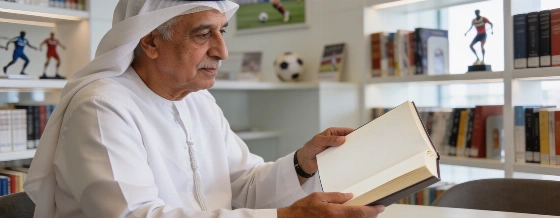
For the first time, a sports biography in the UAE has been launched at four separate events within a single week. This unusual rollout reflects the high regard for Sultan Saqr Al Suwaidi in the country's sports and cultural circles, and hints at a shift in how the UAE records the contributions of its sports leaders.
According to verified football data, Sultan Al Suwaidi is listed as a UAE national born on 26 November 1993, who played as a defender and recorded 2 matches and 36 minutes played in the 2022/2023 season without scoring any goals.
Historically, sports documentation in the UAE has not kept pace with the country's athletic achievements. While clubs and federations have celebrated wins, the stories of the people who built the system have often gone unrecorded. The Al Suwaidi biography aims to change this, offering a carefully researched account that covers the early days of Emirati sport and its later growth.
Independent search results have not confirmed the existence of a separate official sports chronicle publication about Sultan Saqr Al Suwaidi or its launch at four events in one week. Most sources referencing Sultan Al Suwaidi pertain to his football player profile, not to a sports administrator. Additionally, the Al Suwaidi surname is associated with several public figures in the UAE, which increases the risk of confusion between individuals.
Recording the lives of sports leaders is not just a formality. It helps preserve the country's collective memory, supports researchers, and guides future generations. Recent efforts, such as training Emirati sports commentators, show a growing interest in professionalism and history across the sector.
Still, one book is not enough. The Al Suwaidi project should encourage athletes, administrators, and federation leaders to document their own stories. Without this, important details risk being lost over time, leaving gaps that are hard to fill later.
This publication stands out for its thorough, evidence-based approach. It traces the beginnings of Emirati sport, key decisions, and the people who shaped its direction. Rather than simply celebrating the past, it serves as a reference for anyone interested in how the UAE's sports identity was built.
As someone who has watched the changing priorities in UAE sport, I see the Al Suwaidi biography as a turning point. It highlights the lack of documentation in our sports institutions and sets a higher standard for the future. If the UAE wants to truly honor its sports pioneers, this level of careful record-keeping should become standard practice. Anything less risks losing the stories of those who built the nation's athletic foundations.