
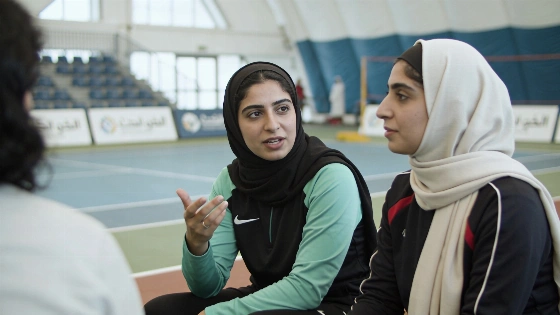
At Paris 2024, Maryam Al Farsi ran the 100 metres at age 16. Months of training can come down to a race lasting 13 seconds. For Emirati women at elite level, a career also depends on family support, funding and the chance to study without giving up sport. The race is brief.
At the 2026 Asian Games in Aichi-Nagoya, Mariam Kareem won the UAE's first gold medal at the Games in the 400 metres hurdles, setting a record of 54.31 seconds and the world's fastest U20 time of 2026.
Elite sport needs support beyond training
Weightlifter and mental health advocate Amna Al Haddad moderated the discussion, titled "Rising Stronger and Better: Identity, Heritage and the Next Generation". The speakers were Maryam Al Farsi, the first Emirati woman to compete in an Olympic athletics event; winter-sports athlete Amena Al Muhairi; mixed martial arts professional Zamzam Al Hammadi; and national-team swimmer Maha Al Shehi.
The athletes spoke about preparing for brief events and the pride and pressure of representing the UAE abroad. They also said family backing, care and funding can determine whether an elite sporting career is sustainable. Al Etihad's coverage also noted the importance of sponsorship, alongside family support and financing. Support makes a difference.
Visibility alone will not grow participation if young athletes have to choose between education and competition. That is the challenge the series put on the table.
Flexible study and more career paths
Al Muhairi studies at the London Sport Institute in Dubai. She said flexible study arrangements help her manage coursework alongside training and winter-sport competitions. Al Etihad also reported that the schedule lets her pursue education and snowboarding without choosing one over the other. The panel discussed what needs to change so young athletes do not face that choice.
The wider Dubai sports calendar has also drawn recent coverage. This series shifts the focus from events to the conditions that help women take part and build careers in sport.
WAM identified Al Farsi as the first Emirati female sprinter to compete at the Olympics. She ran the 100 metres at Paris 2024 at age 16. Al Farsi said discussions like this can give women athletes greater visibility and help build support networks. She urged girls to trust their abilities, persist and claim their place in sport.
Al Shehi represented the UAE at Paris 2024. She described equal opportunity as a fair chance for every athlete to show what they can do. In recent years, wider access to elite training and competition has encouraged Emirati women to raise their ambitions and compete internationally, she said.
Two more sessions are planned for the coming months. One will cover women's health, wellbeing and exercise at different stages of life. The other will look at career paths for women on and off the field. Charvi Ajay Bhat, the university's executive for partnerships and sports development, said the series aims to examine the opportunities and support systems behind sporting achievement.
The initiative's value will depend on whether talk about support leads to clearer routes into sport and lasting careers. Middlesex University Dubai and the London Sport Institute are putting education, funding and professional pathways alongside athletic achievement. Those practical barriers shape whether more Emirati women can take part and progress.