
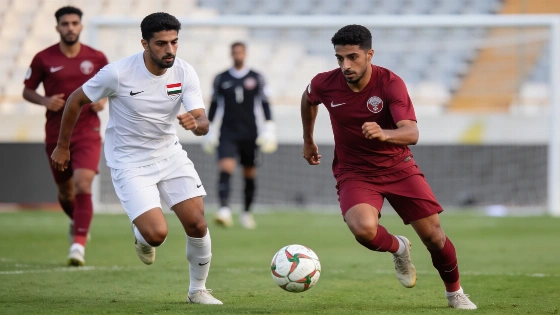
The Gulf Cup 27 semi-final is set for Saturday, 3 October, in Jeddah. Kick-off is listed as 21:30 local time, about 22:30 in the UAE. The final is set for 6 October. Oman's counter-attacks pose the immediate danger as the UAE chase a place in the final. Expected returns for key starters give Zlatko Dalic more options, but his side will still need to defend with discipline.
Oman and Iraq finished the group stage level on points, goal difference, goals scored and disciplinary criteria. A draw of lots decided which team advanced to the semi-finals, Sharjah 24 reported.
Contain the transition threat
Oman can exploit the space when possession changes hands. The UAE's back four must stay compact and keep the channels closed to Nasser Al Rawahi and experienced striker Issam Al Subhi.
Centre-backs Pimenta and Alaa Zuhair have formed an effective barrier in the opening two matches. Miloni has contributed at both ends. His precise passing helped create three goals against Yemen and Bahrain. His play on the right gives the UAE an important route into the attack. Space matters.
Oman booked its semi-final place with a 3-1 win over Kuwait. Nasser Al Rawahi scored twice, and Musab Al Shaqsi added the third goal, Oman Observer reported.
Selection becomes an attacking asset
New international Koulibaly and Issam Faiz have established themselves as credible options in central midfield. Jimenez has become the most influential link in attack. He can drive forward, create chances and score.
Dalic's main question is how to use the depth around him. Osman Kamara has impressed as a centre-forward. Bruno has handled the roles assigned to him. Bala has made a case for a starting place through his work as a substitute. Ali Saleh has scored twice in the last two matches and offers another clear attacking threat. Yuri is out of the coaching staff's plans, so Luan could get an opportunity across the forward line.
The UAE's group-stage push was covered in an earlier Qatar preview. Against Oman, depth matters only if the selected players can press forward and protect against the break. That balance is the test.
A familiar coach and a different challenge
Oman are led from the touchline by Tarek Sektioui, the Moroccan coach who previously guided Morocco to the Arab Cup title. Morocco beat the UAE 3-0 in the Doha semi-final on 15 December 2025. Saturday's match is a different challenge, with a place in the Gulf Cup final at stake.
The UAE have enough attacking alternatives to shape the match rather than simply react to Oman. Their best chance of progressing rests on pairing that flexibility with a compact defence. Deny Oman space to break, and the UAE's forward options become an advantage.